A Rich History
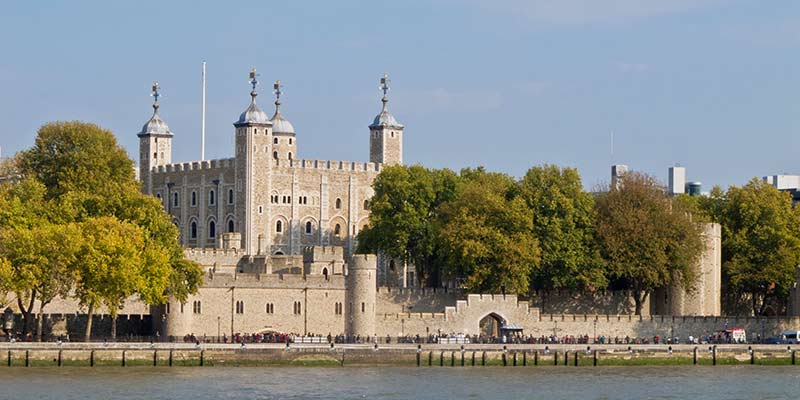
A medieval fortress in the conquest of London
Construction of the fortress began in the late 11th century. The Tower of London's keep, known as the "White Tower", was built by William the Conqueror. The King of England sought to assert his authority by fortifying his position at the gates of London.
At the time, the construction of the Tower of London was part of a wider project to build several fortresses and castles to cement his dominion over England. The strategic location of the Tower on the banks of the Thames made it an essential command centre.
From royal residence to prison
The Tower of London served many purposes depending on the needs of the British Crown. Initially an administrative and strategic centre, it later became a royal residence thanks to the chambers in the White Tower.
From the 16th century, however, it was primarily used as a prison. The Tower of London saw many of the country's most prominent figures imprisoned within its walls: Elizabeth I, future Queen of England; James I, King of Scotland; Thomas More, the renowned philosopher and statesman; and Anne Boleyn, the second wife of Henry VIII.
The bloody myth of the Tower of London
As one of the country's most important prisons, the Tower of London acquired a notorious reputation. It is considered a cursed place due to the torture and executions that took place there.
In reality, this image is largely a myth, constructed and popularised by English literature, particularly in the 19th century.
Most executions actually took place on Tower Hill, near the fortress, and the living conditions of Tower prisoners were, on the whole, better than those in other prisons of the era.
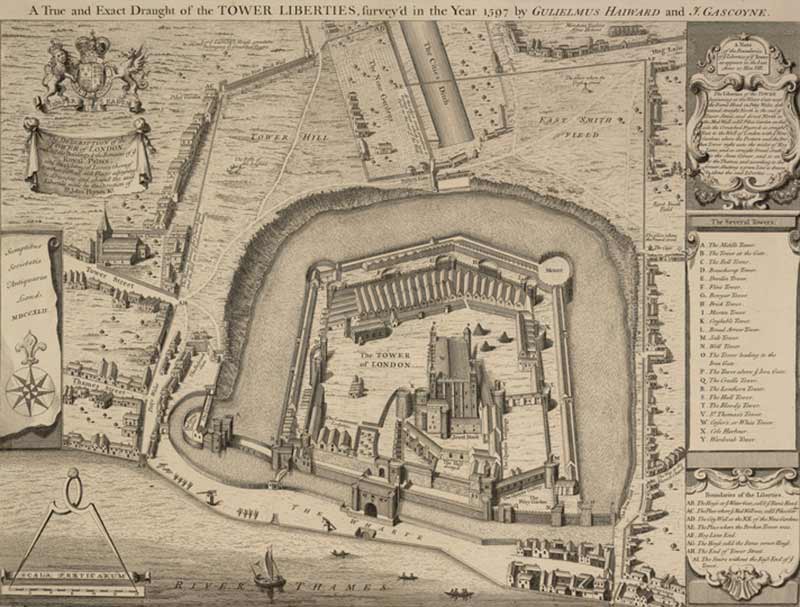
Visiting the Tower of London
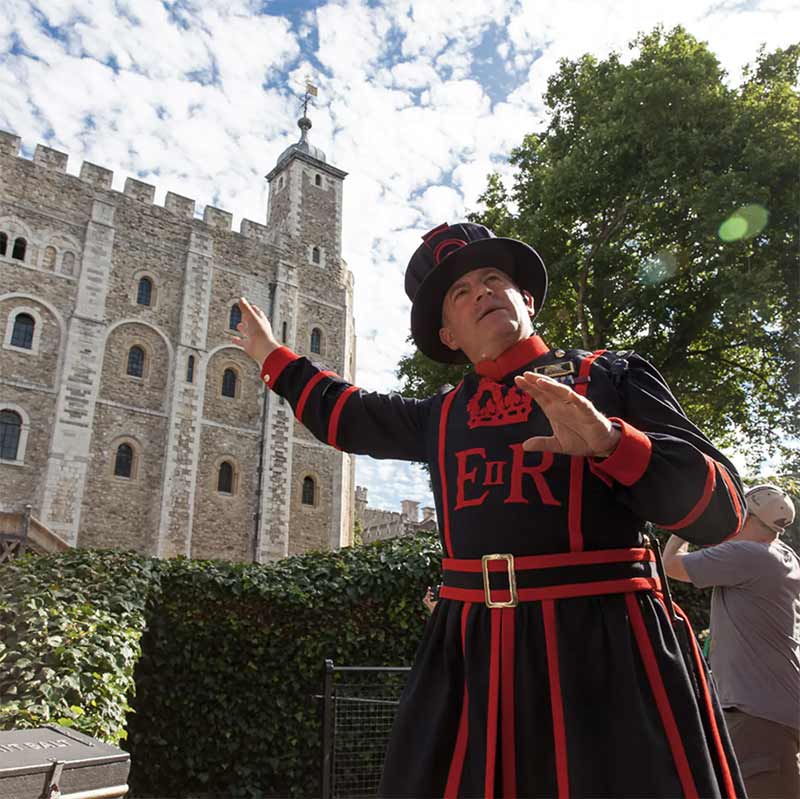
With your Tower of London ticket, you'll be able to discover all the wonders of this great fortress. Behind its walls lie the iconic White Tower, many other towers, a royal chapel and the Waterloo Barracks.
The visit holds special surprises: the White Tower, the Crown Jewels, encounters with the Yeomen Warders and the Tower's famous ravens.
To choose the right way to explore the fortress, also read our page about Tower of London guided tours.
For a more complete discovery of the English capital, you can also explore London on foot and admire iconic landmarks such as the Tower of London and Tower Bridge.
The White Tower
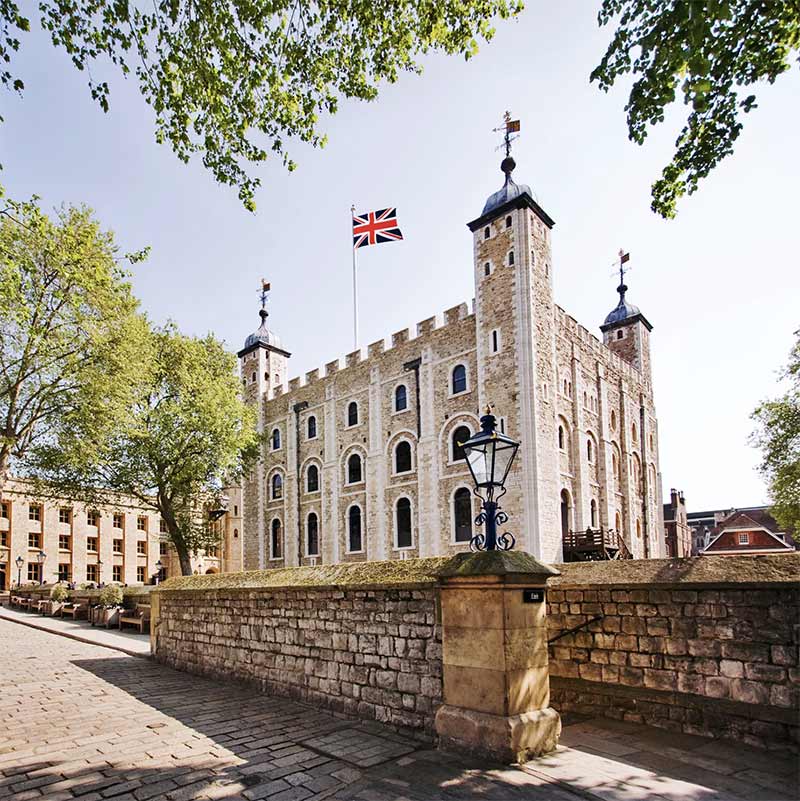
The White Tower is the iconic monument of the Tower of London - it is from this keep that the fortress takes its name.
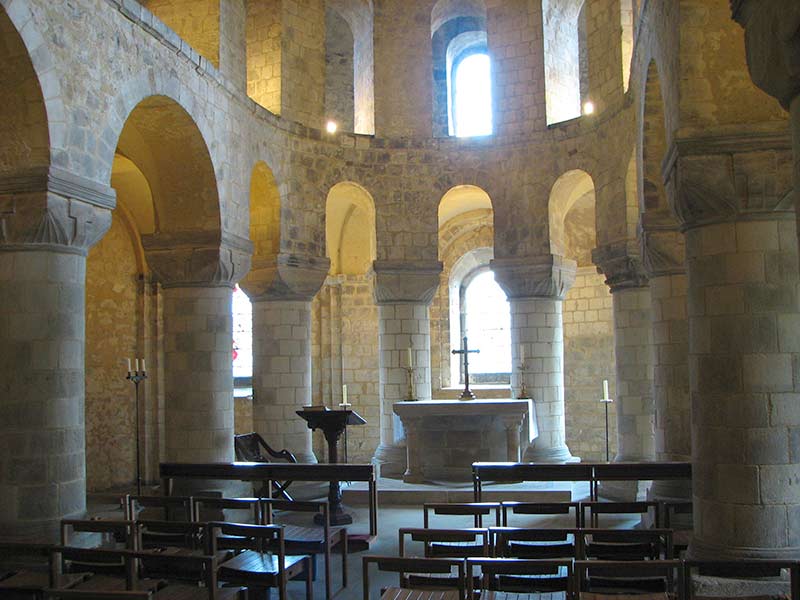
In this imposing keep, you will find a magnificent Romanesque chapel, the Chapel of St John the Evangelist.
The White Tower also houses one of the Royal Armouries collections, featuring numerous historical armours and weapons, some of which belonged to former sovereigns.
The Crown Jewels
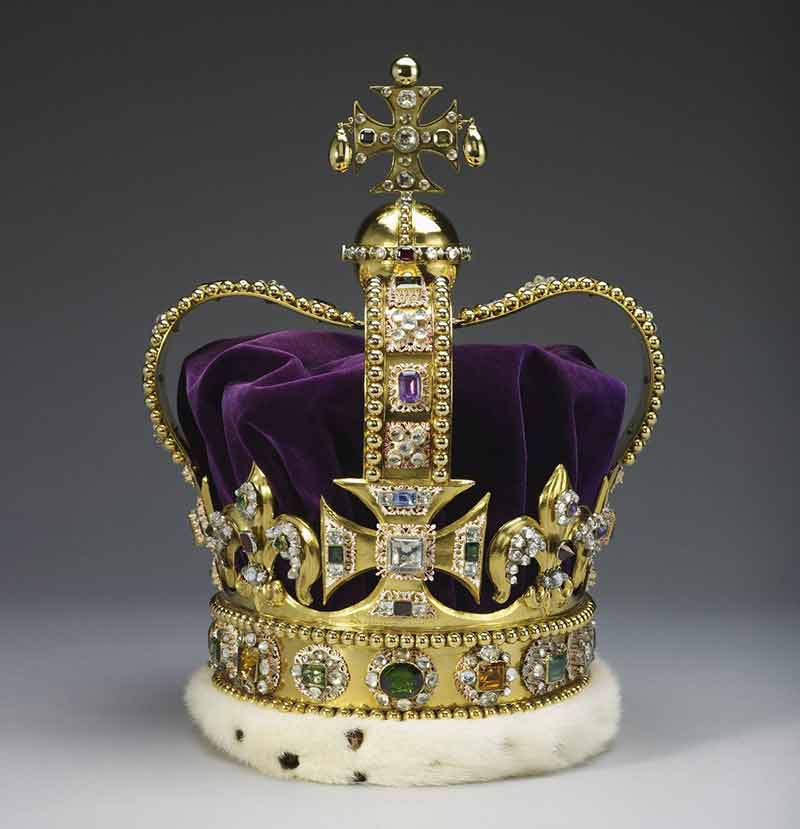
The Tower of London is perhaps best known for housing the Crown Jewels - the regalia including crowns, sceptres and swords worn by the Sovereign during major ceremonies such as coronations and royal weddings.
With your Tower of London ticket, you can discover these treasures of the British monarchy, still used by members of the royal family today. Photography is strictly prohibited.
The Yeomen Warders
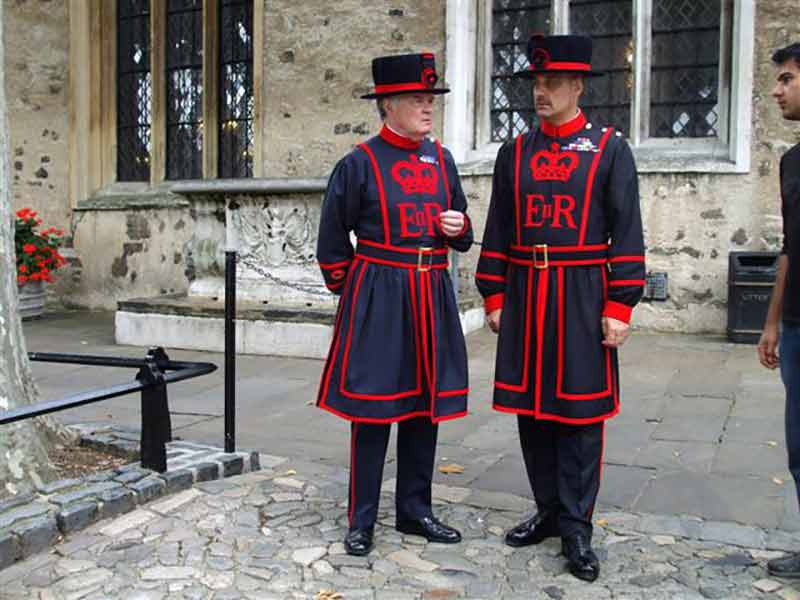
Recognisable by their red and black uniform, the Yeomen Warders are the historic guardians of the Tower of London - since 1485! These members of the royal guard, also nicknamed the "Beefeaters", protect the Crown Jewels and lead guided tours of the fortress.
Departing every 30 minutes and included in your entry ticket, these tours with a Yeoman Warder take you through a thousand years of Tower history. Presentations are in English, but audio guides are available in several languages.
How to become a Yeoman Warder?
Becoming a Yeoman Warder is no easy feat! To join this unit of the royal guard, you must have served for at least 22 years in the armed forces with an impeccable record. Don't be deceived by appearances: behind the distinctive "Beefeater" costume are highly decorated military veterans!
Where does the nickname "Beefeaters" come from?
The Yeomen Warders are nicknamed the "beef eaters". This surprising expression has uncertain origins. Some say it was simply slang for "English". Others believe it refers to the fact that the Yeomen Warders were mainly fed on beef broth. The mystery remains!
The Ravens
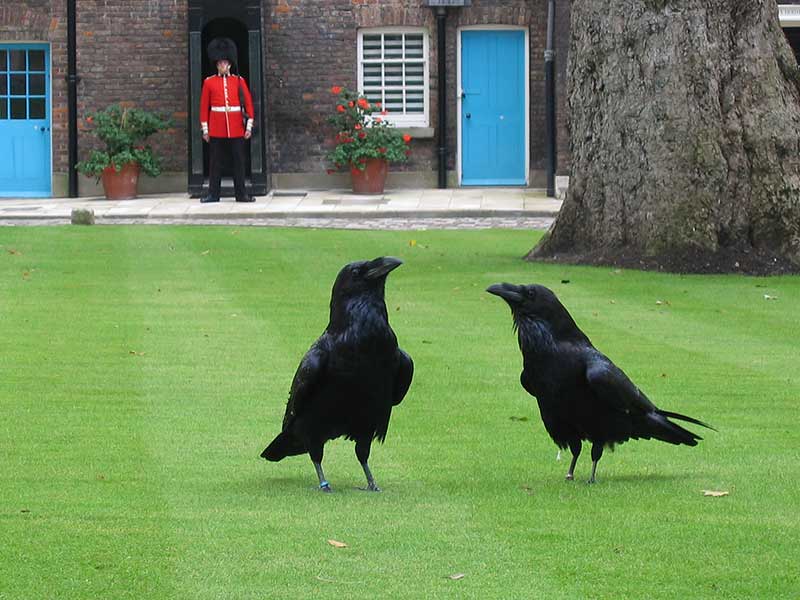
When you visit the Tower of London, you'll spot some rather unusual birds: ravens! There are seven of them, all fed by the guardians and free to roam the fortress.
Legend has it that if the ravens were ever to leave the Tower of London, the British monarchy would crumble. To ward off this ill omen, the ravens are lavishly cared for!
Be warned though: you are not allowed to feed them.
Who is the Tower of London for?
The Tower of London is suitable for all audiences. History enthusiasts will be immersed in the conflicts, secrets and rituals of the British monarchy.
Children will also enjoy the visit, thanks to the many anecdotes and myths shared along the way. For young and old alike, a visit to the Tower of London is a unique way to discover the city of London!
Before booking, find answers about mobile tickets, prices and accessibility in our Tower of London FAQ.
Know before you go
- Wheelchair access is limited in parts of the site.
- Some areas of the fortress may be overwhelming for young children.
- The Tower of London is a historic building with stairs that can be difficult to navigate.
Timeline
- Construction
William the Conqueror establishes his fortress
After his victory at Hastings, William the Conqueror sought to assert his power over London. He ordered the construction of an initial fortress near the Thames, in a strategic location to control the city.
- Construction
The White Tower rises
William the Conqueror ordered the construction of the White Tower, the great keep that would give its name to the entire complex. More than a castle, it was a political statement: the new Norman power was here to stay.
- Prisoners
Ranulf Flambard, the first known prisoner
Ranulf Flambard was the first known prisoner of the Tower. He did not stay long: in 1101, he escaped with the help of a rope hidden in a barrel of wine, after getting his guards drunk.
- Construction
Richard the Lionheart strengthens the fortress
While Richard the Lionheart was away on crusade, the Tower was expanded and reinforced. New defences were added to make the fortress a key stronghold of royal power.
- Royal residence
Henry III transforms the Tower into a royal residence
Henry III wanted not just a fortress but a residence worthy of a king. He embellished the royal apartments, decorated the chapels, and transformed the Tower into a true prestigious residence.
- Construction
The Tower takes on almost its current form
Under Henry III and then Edward I, the Tower expanded with new ramparts, defensive towers, a wide moat and several gateways. The overall layout would remain remarkably stable for centuries to come.
- Menagerie
A polar bear fishes in the Thames
The royal menagerie welcomed a polar bear gifted by the King of Norway. To feed the animal, it was sometimes allowed to fish in the Thames — a rather unlikely scene in the heart of medieval London.
- Menagerie
A royal elephant arrives at the Tower
The King of France gifted an elephant to Henry III. A shelter was specially built for it at the Tower, but the animal survived only two years in England.
- Construction
The future Traitors' Gate takes shape
Edward I had a water gate built giving direct access to the Thames. It would later become the famous Traitors' Gate, associated with the arrival of many high-ranking prisoners.
- Military
A fortress at the heart of power
The Tower served simultaneously as a royal residence, prison, arsenal, treasury, archive, and storehouse for precious goods. At this time, controlling the Tower often meant controlling part of the kingdom.
- Prisoners
John Balliol, King of Scotland, held prisoner
The Scottish king John Balliol was imprisoned in the Salt Tower after his defeat by the English. His presence was a reminder that the Tower held not just criminals, but also defeated sovereigns.
- Prisoners
Roger Mortimer escapes via the Thames
Roger Mortimer managed to escape from the Tower with the help of a confederate on the inside. He broke through a wall, fled by boat, reached France — then later returned to overthrow the English government.
- Prisoners
Enemy kings imprisoned in London
During the wars against Scotland and France, the Tower held several prestigious prisoners, including French and Scottish nobles captured in battle. The fortress became a showcase of English power.
- Royal residence
The symbolic departure to the coronation
From the coronation of Richard II onwards, sovereigns traditionally departed from the Tower of London to travel to Westminster Abbey. The Tower thus became a symbolic staging point in the exercise of royal power.
- Military
The Tower stormed during the Peasants' Revolt
During the Peasants' Revolt, a crowd broke into the Tower while Richard II was inside. The Archbishop of Canterbury, Simon Sudbury, was captured and executed on Tower Hill.
- Prisoners
Richard II imprisoned in the White Tower
After being overthrown by Henry Bolingbroke, Richard II was imprisoned in the White Tower. He abdicated shortly after, paving the way for the reign of Henry IV.
- Prisoners
Charles of Orleans, a noble French prisoner
After the Battle of Agincourt, several French nobles were held at the Tower awaiting payment of their ransom. Among them was Charles of Orleans, a celebrated prince and poet.
- Prisoners
The Princes in the Tower vanish
Edward V and his young brother Richard were imprisoned in the Tower, officially for their protection. They disappeared shortly afterwards, leaving behind one of the greatest mysteries in English history.
- Prisoners
The Tower becomes the prison of the powerful
Under the Tudors, the Tower lost its role as a permanent royal residence. It became primarily the place where politicians, religious figures, and royals who had fallen from grace were imprisoned.
- Executions
Anne Boleyn is executed
Anne Boleyn, the second wife of Henry VIII, was executed within the precincts of the Tower. Her tragic fate remains one of the most celebrated episodes associated with the fortress.
- Executions
Catherine Howard meets the same fate
Catherine Howard, the fifth wife of Henry VIII, was also executed at the Tower. Within just a few years, the fortress became closely associated with the dramas of Henry VIII's reign.
- Executions
Lady Jane Grey, queen for nine days
Jane Grey, briefly proclaimed Queen of England, was executed at the Tower at only 16 years old. Her story remains one of the most poignant episodes of the Tudor period.
- Prisoners
Elizabeth imprisoned before becoming queen
The future Elizabeth I was imprisoned in the Tower by her half-sister Mary I following the Wyatt Rebellion. She left alive and went on to become one of England's most celebrated monarchs.
- Prisoners
Guy Fawkes interrogated after the Gunpowder Plot
After the failure of the Gunpowder Plot, Guy Fawkes was imprisoned in the Tower. He was interrogated and tortured there before confessing his role in the plot against Parliament.
- Prisoners
Walter Raleigh lives in prison with his family
Walter Raleigh was detained in the Tower, but under very particular conditions. His cell was fitted out to accommodate his family, and his son is said to have been born there.
- Crown Jewels
The Crown Jewels go on public display
The Crown Jewels were moved to the Martin Tower and began to be shown to the public. The Tower gradually became as much a place of visiting as a symbol of power.
- Crown Jewels
Thomas Blood attempts to steal the Crown Jewels
Thomas Blood and his accomplices attempted to steal the Crown Jewels. They overpowered the keeper and managed to seize several pieces before being caught just in time.
- Menagerie
Entry paid with a cat or dog
When the royal menagerie opened to the public, admission cost three pennies. Another option, far less charming: bringing a cat or dog to feed to the lions.
- Menagerie
The animals leave the Tower
The last animals of the royal menagerie were transferred to Regent's Park. After several centuries, the lions, bears and other exotic animals finally left the fortress for good.
- Construction
The Tower regains its medieval appearance
With the revival of interest in the Middle Ages, the Tower was restored to achieve a more ancient appearance. Several more recent buildings were demolished or transformed.
- Military
The Tower serves again during the First World War
During the First World War, several men accused of espionage were tried in secret and executed at the Tower. The fortress briefly regained a very dark military role.
- Prisoners
Rudolf Hess held for a few days
Rudolf Hess, a close associate of Adolf Hitler, was held in the Tower for four days in 1941. He is considered the last prisoner of state to be locked up in the fortress.
- Executions
The last execution at the Tower
Josef Jakobs, a German spy, was shot at the Tower on 14 August 1941. It was the last known execution in the fortress's history.
- Tourism & heritage
The Tower joins the World Heritage List
The Tower of London was inscribed on the UNESCO World Heritage List. It was recognised as one of the most important historic monuments in the United Kingdom.
- Legend
The ravens watch over the monarchy
According to tradition, if the ravens leave the Tower, the monarchy will fall. To this day, several ravens are fed and watched over with the utmost seriousness.
- Tourism & heritage
A historic icon of London
The Tower of London welcomes millions of visitors each year. It still houses the Crown Jewels, the Yeomen Warders, the famous ravens, and nearly a thousand years of British history.